
LinkedIn is the go-to platform for professional networking and B2B lead generation. As of 2025, LinkedIn boasts over 1 billion members globally, and an estimated 4 out of 5 of those members hold roles that influence business decisions.
For founders of professional service businesses, that represents a huge opportunity to attract clients and establish authority. But securing that opportunity requires a strategic content approach tailored to your niche target audience.
Paid ads might grab a moment of attention, but ads alone rarely build the kind of trust that converts visibility into real conversations or clients. Instead, founders are finding success by consistently showing up with content that educates, builds credibility, and encourages genuine engagement – in other words, thought leadership over sales pitches.
This 2026 guide lays out how to create a LinkedIn content strategy that delivers exactly that: long-term trust and tangible business results.
Why LinkedIn Matters for Professional Services in 2026
LinkedIn has cemented itself as the number-one platform for B2B marketing and networking – especially for professional services. The statistics speak for themselves: nearly 89% of B2B marketers use LinkedIn for lead generation, and 62% say it generates leads for them, over twice the rate of the next-highest social channel.
For professional service founders, this is critical. Your business likely thrives on reputation, expertise, and relationships – and LinkedIn is engineered to amplify exactly those factors. It’s telling that 76% of B2B marketers rate LinkedIn as the most effective social media channel for sharing thought leadership content.
People come to LinkedIn with a business mindset and actively seek content that can help them solve problems or improve outcomes. Unlike platforms where entertainment is king, LinkedIn’s culture favours insight and industry conversation.
In short, if you want to get in front of prospects in 2026, a strong LinkedIn presence is essential. If you’re not visible, they’ll choose a competitor when they’re ready to buy.
Lead with Trust and Thought Leadership
On LinkedIn in 2026, trust is the new marketing currency. Professional services have always been built on relationships and credibility, and your content strategy must reflect that. Instead of promotional posts pushing your services, focus on thought leadership content that demonstrates your expertise. Why? Decision-makers actively seek out high-quality insight and reward those who provide it. Nearly 3 in 4 B2B decision-makers (73%) say an organization’s thought-leadership content is a more trustworthy basis for assessing its capabilities than its traditional marketing materials or product sheets. In other words, a thoughtful LinkedIn post or article that educates your audience can influence perception more than any polished brochure or ad ever will.
What does effective thought leadership look like? It could be sharing a unique insight from a client engagement (while respecting confidentiality), analyzing new research or regulations in your field, or offering a fresh perspective on common challenges your clients face. The key is that it must be valuable to your target reader – addressing real questions or pain points – rather than valuable only to you (like a sales pitch).
At the same time, it’s important not to create content for a mass audience. Generic advice may reach more people, but it rarely resonates. Instead, tailor your content to your niche – the specific industry, role, or problem set you work with – so that the right people see themselves in it. This helps avoid surface-level engagement and ensures your insights lead to meaningful conversations and stronger positioning within your market.
Building trust through content also means showing the human side of your leadership. For startups and small businesses especially, the founder’s presence on LinkedIn carries enormous weight. Most clients choose professional service firms based on the people behind them – and when you’re a solo founder or small team, you are the brand.
It’s far more effective to speak in the first person (“Here’s what I’m seeing in the industry…”) than to rely on a faceless company page post. Sharing insights, reflections, and experiences directly builds connection and credibility faster than polished corporate messaging ever could.
One powerful strategy here is educational storytelling. Instead of just asserting that you’re an expert, show it by sharing stories or data. For example, a consulting firm founder might post: “We recently encountered [X challenge] with a client. Here’s how we approached it and the surprising insight we learned…” Posts like this provide value (others learn from the example), position you as a problem-solver, and invite engagement from peers who may have faced similar issues.
This is how you attract prospects naturally: by demonstrating expertise and helpfulness, you become a trusted resource. Indeed, when buyers find your content genuinely useful, you’ve begun building a relationship long before any sales call.
Consistency Over Volume: A Strategy That Supports Your Business
One of the biggest challenges I see for founders is staying consistent on LinkedIn, especially when content relies on spare time, motivation, or inspiration. And when client work is the priority (typically the case for startups and small businesses), those things don’t stretch far.
In 2026, visibility isn’t about posting daily. It’s about showing up regularly with content that is relevant and genuinely useful to the people you want to reach. Decision-makers don’t trust the loudest voices. They trust the ones they see often enough to recognise, especially when the content feels relevant, thoughtful, and grounded in real expertise.
That’s why the most effective content strategies are built on three things:
A rhythm that fits your week
Topics rooted in what you know best
A setup that doesn’t drain your time or energy
If content constantly competes with running the business, it won’t last. But if you build a system that turns your thinking into content consistently — visibility starts to support your business, not distract from it. Even a simple, realistic rhythm (like one quality post a week) can position you as a trusted voice in your niche — and that’s where the right conversations begin.
Embrace a Founder-Led Approach
In professional services, trust is often built on people, not brands. That’s why a founder-led presence on LinkedIn is one of the most effective ways to create visibility and credibility. Clients want to hear from the person behind the business. They want perspective, insight, and a sense of who they’ll be working with.
Posting from a personal profile gives founders an edge. It allows you to share stories, opinions, and expertise in a way that feels human, something a company page can’t replicate. Whether it’s a quick industry take, a lesson from client work, or commentary on a recent trend, when your content comes from a real person, it builds connection.
The same is true if you have a small team. When consultants or key staff share their expertise online, it multiplies your company’s reach. Their posts add depth to your brand and give potential clients a sense of the people delivering the work. In a world where people buy from people, that matters.
To make this approach work:
Speak in your own voice. Share your perspective clearly and avoid corporate jargon.
Be present. Engage with comments, join relevant conversations, and reply when people interact.
Keep your profile updated with key information. Use your headline to show who you help and how, not just your job title. A well-written profile reinforces everything your content says and ensures someone understands exactly what you do as soon as they visit it.
People want to work with experts who feel approachable and real. A founder-led LinkedIn strategy helps your business stand out, not by being louder, but by being more relatable, more consistent, and more human.
Diversify Your Content Formats
LinkedIn content doesn’t need to look the same every time — in fact, mixing up the format keeps your feed more engaging and helps you reach people in different ways. And in 2026, the formats that stand out are the ones that feel the most human and genuinely helpful.
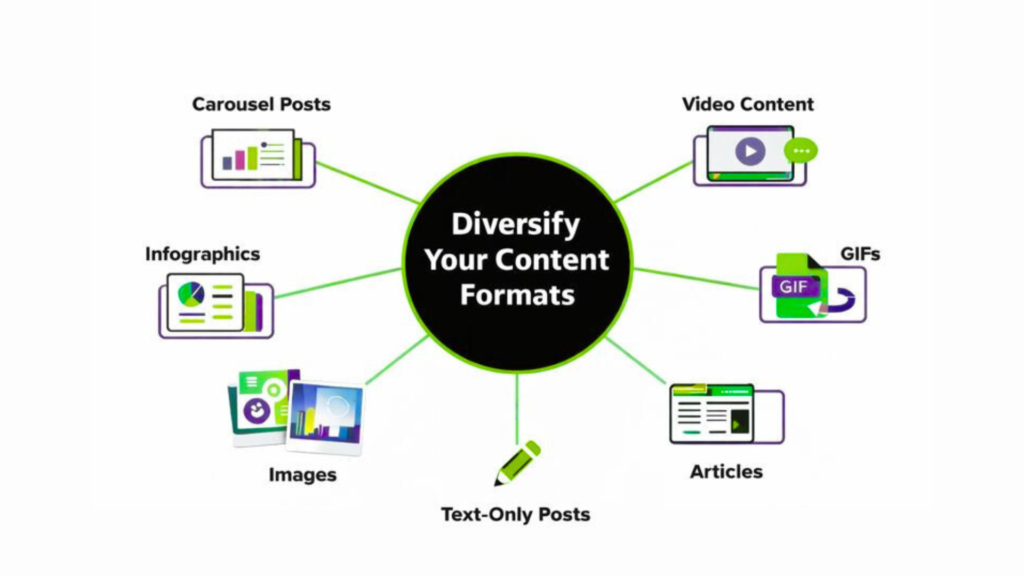
Carousel posts: A great way to break down a topic into bite-sized insights. Think of them like visual summaries — one idea per slide, clean and clear. They make people slow down to scroll through and are shareable, especially when they’re framed around useful advice or a fresh point of view.
Video: Video builds trust quickly because people can see and hear you. You don’t need studio lighting or fancy edits, a quick, focused video sharing a perspective or tip can go a long way. Keep it short, add captions, and speak like you’re talking to a client.
Infographics: When you want to simplify data, processes, or comparisons, infographics are an effective format. They work especially well for summarising research, mapping out frameworks, or showing timelines and they tend to earn saves and shares because they’re visually easy to reference.
Text-only posts: Still one of the most powerful formats when done well. Short reflections, opinion pieces, or advice drawn from client work often perform best when they’re written clearly and structured for easy reading. Don’t underestimate their impact.
GIFs and motion snippets: These can help your posts stand out in a crowded feed, especially when used to reinforce a point visually or add personality to a piece of content. Use them sparingly and purposefully to support, not distract from, your message.
Cross-promote external content: If you’re publishing articles, guides, or podcasts on your website or other platforms, make sure you’re sharing those consistently on LinkedIn. Cross-promotion not only drives traffic back to your site but helps build authority over time. We do this often with clients. it creates more touchpoints without needing to create brand new content from scratch.
Whichever format you choose, the goal is the same: deliver value in a way that feels approachable. Share content that sounds like you. Use examples, real stories, or lessons from your work. And pay attention to what resonates, the best formats are the ones your audience actually engages with.
If you’ve posted a video and it gets good feedback? Do another one. If a carousel gets saved and shared? Create more. Let the data and your own rhythm shape your content mix — and remember, variety can make you more memorable.
How to Know if Your Content Is Actually Working
Don’t just measure content performance post by post. Look at whether your presence is creating traction over time.
Metrics that matter include:
Website traffic from LinkedIn: Are people clicking through to your site?
Profile views and follows: Are the right types of people paying attention?
Connection requests and DMs: Are potential clients reaching out?
Meaningful comments and saves: Are people engaging thoughtfully with your ideas?
These indicators go beyond likes, they show you’re building visibility and credibility in the right places. For our clients, these are often the early signals that content is paving the way for inbound opportunities.
It’s not about going viral. It’s about being consistently visible to the people you actually want to reach and creating content that makes them want to learn more.
Optimise for 2026: Help the Right People Find You
Creating valuable content is only part of the equation, it also needs to be discoverable. In 2026, that means thinking about both how humans search and how LinkedIn’s algorithm works.
Use the right language: Think about what your clients actually search for. Use clear, relevant phrases naturally in your posts and profile. This helps LinkedIn understand what you do and match your content with the right people.
Smart hashtags and mentions: Stick to 2–3 relevant hashtags that reflect your industry or topic. Mentioning others (only when it adds value) can also increase reach. Keep it relevant, not spammy.
Post when your audience is active: Test different times and see what gets traction, then stick with what works. For many, that’s mornings or early afternoons on weekdays.
Pay attention to analytics: Look at your post performance over time. Are profile views increasing? Are the right people engaging? Are you seeing more inbound messages? These trends say more than one-off likes ever will.
Write for people, but make it easy for AI too: Structure posts clearly, especially longer ones. Use bullet points and plain language. If someone (or something) skims your content, the key points should still land.
Keep up with new features: LinkedIn regularly releases tools and formats. If something fits your strategy, like LinkedIn Newsletters or Audio Events, try it. Often, early adopters see a visibility boost.
Good content doesn’t need tricks to be seen — but it does benefit from being packaged and shared in ways that make it easier to find, engage with, and act on.
Conclusion: Relationships First, Reach Second
The most effective founders on LinkedIn in 2026 aren’t chasing views, they’re building trust. They show up consistently. They speak with confidence and clarity. And they treat content as a tool for connection, not just promotion.
Content that works isn’t always loud, but it’s useful, human, and consistent. That’s what builds authority over time. The more your audience sees you showing up with insight, the more they start to recognise and trust your voice.
Stay focused on progress over perfection. The results build slowly and then all at once. You don’t need to go viral to make an impact. You just need to be visible to the right people, regularly, with something worth paying attention to.
Key Takeaways
You don’t need to post daily, consistency and relevance matter more than volume.
Use content to show your thinking, not just your services.
Focus on helpful, niche-specific advice that builds credibility with your ideal clients.
Diversify formats: carousel, video, infographics, text-only and GIFs — to keep things fresh.
Share external content (like podcasts or blogs) to drive traffic back to your site.
Look beyond likes. Prioritise metrics like profile views, website traffic, saves, and genuine comments.
LinkedIn rewards clarity and consistency. Stay visible and stay human.
About Marketing Evolve
Marketing Evolve is a content and brand strategy agency helping professional service businesses build visibility, credibility, and consistent inbound opportunities through strategic content. From recruitment agencies and consultancies to tech and engineering firms, Marketing Evolve supports founders who want to stand out as trusted leaders in their space — through LinkedIn content strategy, podcast positioning, articles, and high-impact brand assets.
Want support building authority and attracting better clients? Get in touch here.